PRF Injections
What is PRF Injections?
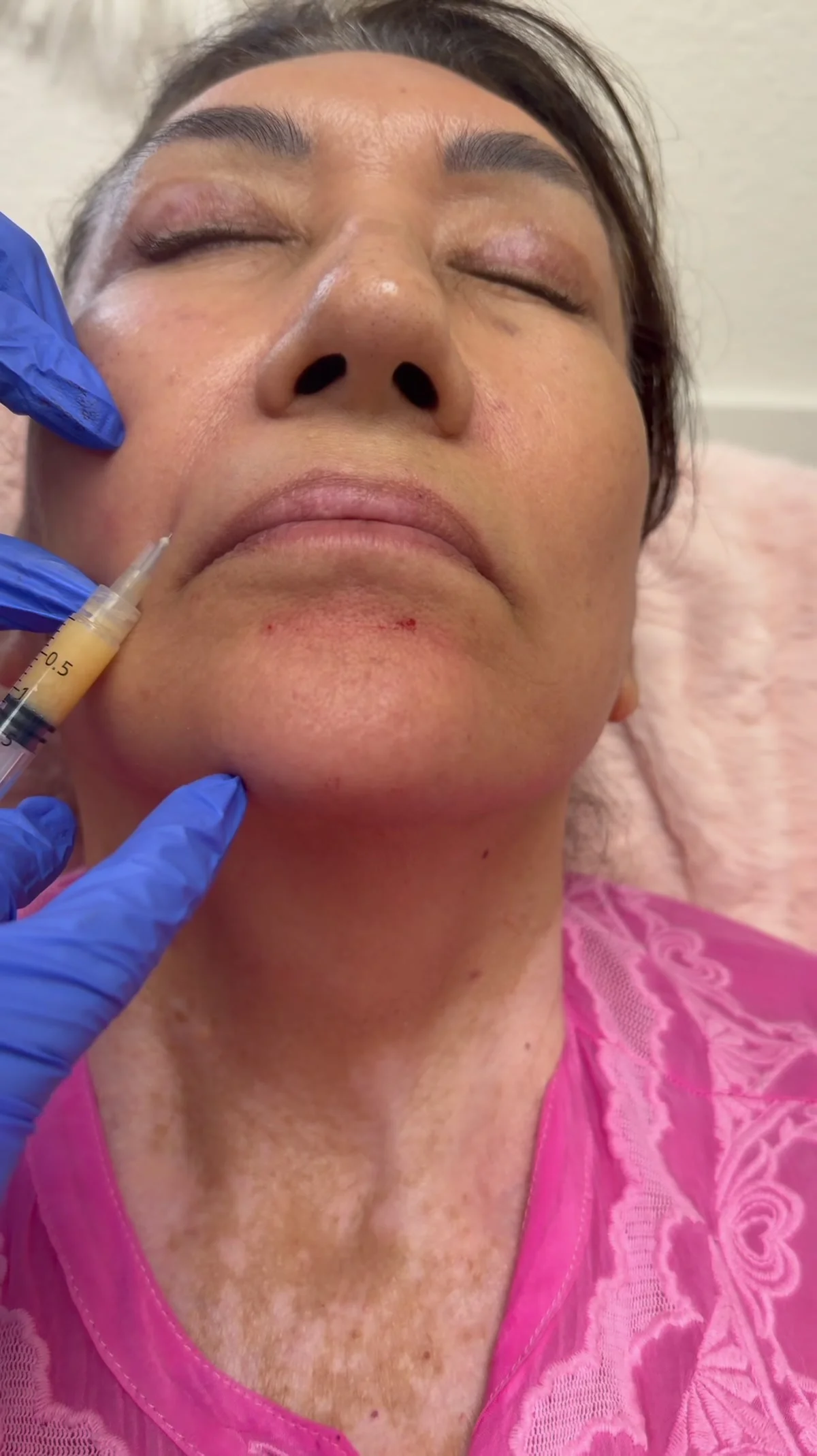
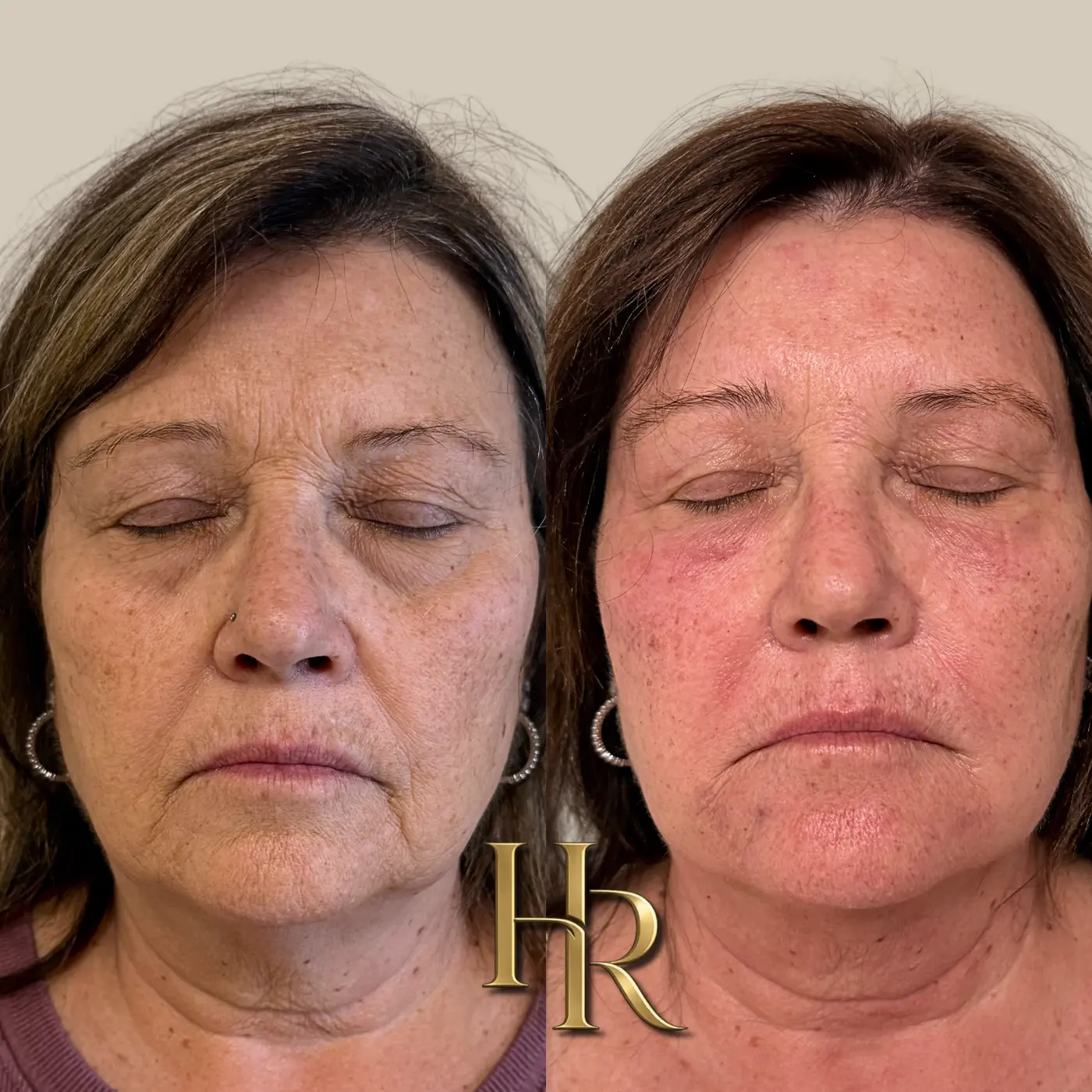
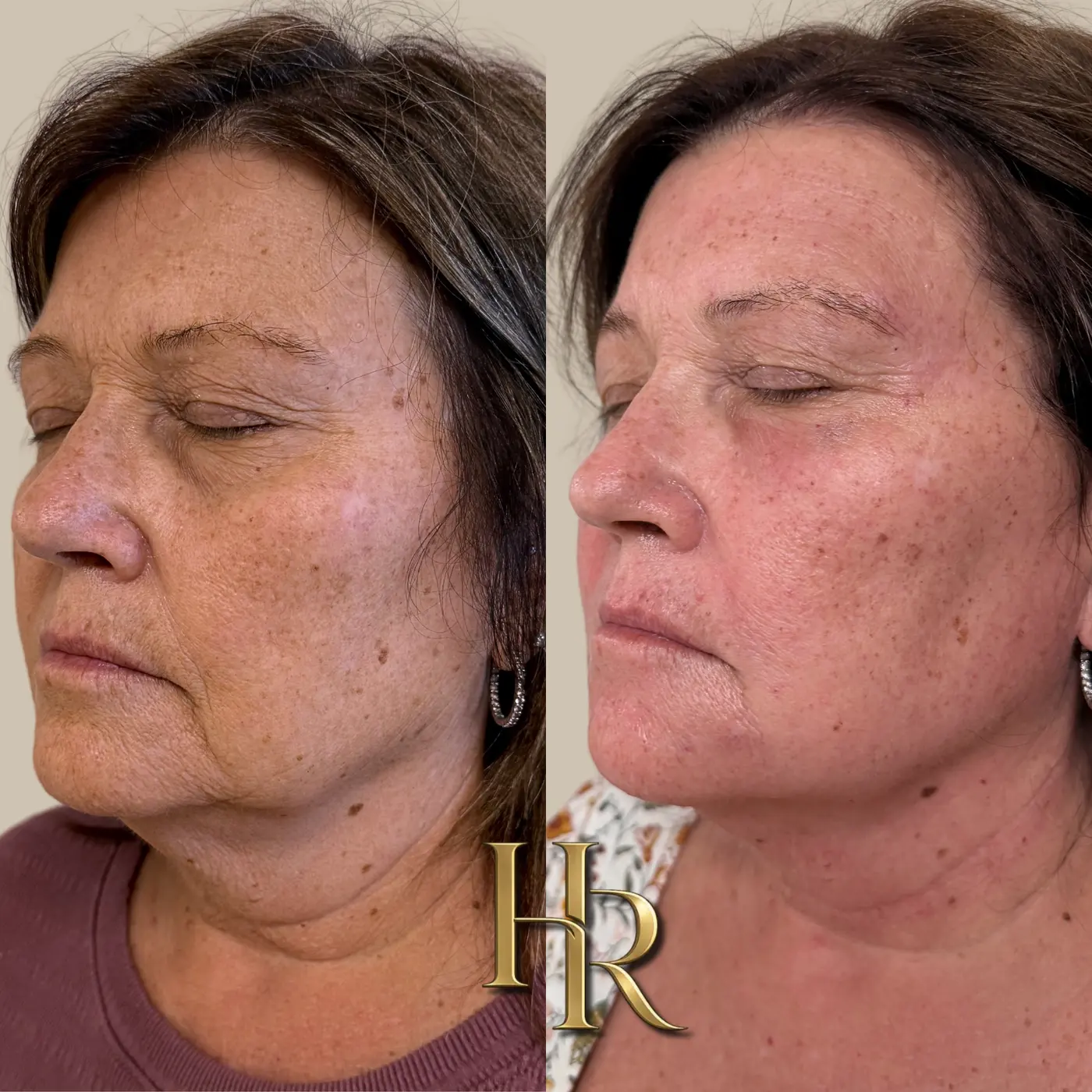
PRF injections use a small sample of your own blood to put your body's own growth factors to work beneath the skin, softening under-eye hollows and the appearance of dark circles and rebuilding collagen for firmer, more even-toned facial skin over the months that follow. Platelet-rich fibrin is drawn like routine lab work and spun in a centrifuge with no additives. Because no anticoagulant is added, the blood forms a natural fibrin scaffold that traps platelets and growth factors; once injected, that scaffold releases those growth factors gradually over roughly one to two weeks, signaling your own fibroblasts to build new collagen and elastin. One level deeper: this slow, steady release is what distinguishes second-generation PRF from older PRP, which stays liquid and releases in a fast burst. Our RN selects the form and spin protocol to the goal, using a liquid injectable PRF for delicate areas like the tear trough. Because it is made entirely from you, PRF carries a very low risk of allergic reaction or rejection, and results develop naturally rather than all at once. An important distinction: this is the injectable, RN-led PRF, performed under medical-director oversight. It is different from our topical PRF, which is applied over microchanneling and never injected. Early changes commonly appear at two to six weeks, with collagen remodeling peaking around three to six months and results commonly lasting six to twelve months. Individual outcomes vary, and not every client is a candidate. PRF vs. PRP — what's the difference? PRF (platelet-rich fibrin) is the second-generation option: it's spun more gently with no anticoagulant, so it forms a natural fibrin scaffold that releases your own growth factors slowly over one to two weeks — versus PRP, which stays liquid and releases in a fast burst. That gradual release is why PRF is a favorite for under-eye rejuvenation. PRF vs. filler: fillers add immediate hyaluronic-acid volume, while PRF uses your own biology to support collagen and skin quality over time — and the two can complement each other. What to expect: mild swelling or occasional bruising for roughly one to three days, with early changes around two to six weeks and continued improvement over the months that follow. Serving Punta Gorda, Port Charlotte, Englewood, North Port, and Venice — walk-ins welcome when the schedule allows, with a consultation first.
See how this treatment fits your goals
When more than one approach may fit, these clear comparisons can help you prepare for a more informed consultation.
Is injectable PRF the same as the topical PRF facial?
No. Our topical PRF is applied to the skin surface during a microchanneling facial to support texture, tone, and radiance. Injectable PRF is a separate, RN-led procedure placed beneath the skin to target under-eye hollows, dark circles, and deeper facial rejuvenation. Same source material, your own blood, but two different services.
Is PRF the same as PRP?
They are related, but PRF uses no anticoagulant and a low-speed spin, so its fibrin scaffold releases growth factors gradually over days rather than in a fast burst. Many providers consider PRF the more advanced, second-generation option because of that steady, sustained renewal signal. Our RN selects the specific PRF preparation to suit your goal.
Does PRF really help under-eye dark circles and hollows?
The under-eye is PRF's most popular and best-studied target. PRF is designed to improve skin quality and the appearance of darkness and mild hollowing, with subtle volume, and its autologous nature suits the thin, delicate under-eye skin. A true deep hollow may still need a small amount of HA filler. Individual results vary, and our RN confirms the right approach for you.
When will I see results, and how long do they last?
Early changes commonly appear at two to six weeks, with collagen remodeling peaking around three to six months. Results commonly last six to twelve months, though the evidence base is still limited and gains can diminish around six months, which is exactly why plans are built as a series with maintenance. Outcomes are individual and depend on your skin, age, and lifestyle.
Is there downtime, and any allergy risk?
Downtime is minimal, but expect mild swelling, redness, and possible bruising for a few days; under-eye swelling is often most noticeable the next morning and settles within 24 to 72 hours. Because PRF is made from your own blood, the risk of allergic reaction or rejection is very low, and side effects are usually mild and short-lived. Final candidacy is confirmed by our RN.
Is PRF FDA-approved?
PRF is an autologous blood product, made from your own blood. The preparation device is FDA-cleared, but the cosmetic procedure itself is not FDA-approved for facial rejuvenation, and we never claim that it is. We describe it factually: your body's own growth factors, put to work beneath the skin. Separately, House of Rose does not currently offer PRF for hair loss; our injectable PRF focuses on under-eye and facial rejuvenation.
What's the difference between PRF and PRP?
PRF (platelet-rich fibrin) is the newer generation — spun gently with no anticoagulant, so it forms a natural fibrin scaffold that releases your own growth factors slowly over one to two weeks. PRP stays liquid and releases in a faster burst. PRF's gradual release makes it a favorite for under-eye rejuvenation.
Is PRF safe, and how long do results last?
Because PRF is made entirely from your own blood, it carries a very low risk of allergic reaction or rejection. Early changes often appear within a few weeks, with collagen remodeling continuing over the months that follow; many clients enjoy results for six to twelve months.
What's the difference between injectable PRF and topical PRF?
Injectable PRF is RN-led and placed into deeper tissue for areas like the under-eyes. Topical PRF is applied over microchanneling at the skin's surface — never injected, since microneedling devices aren't authorized to deliver blood into the skin. Your provider helps you choose.